OEM vs Aftermarket Parts: A B2B Buyer’s Guide
Genuine, OEM and aftermarket body parts reach a B2B buyer through different supply routes, with different identification and different warranty terms.
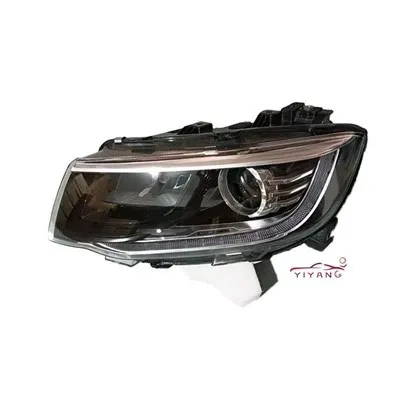
OEM vs aftermarket parts: definitions and differences
The oem vs aftermarket parts comparison begins with three categories. Genuine parts are sold by the vehicle maker’s own dealer network in the maker’s packaging. OEM parts are produced by a supplier that also builds for the vehicle maker but reach buyers through independent channels. Aftermarket parts are made by independent manufacturers from their own tooling and their own part numbers. The three can look alike and still differ in traceability, warranty terms and the route they travel from factory to buyer.
- Fitment verification: genuine and OEM parts reference the maker’s numbering, while aftermarket fitment is checked against the OE number, model year and trim.
- Appearance: surface finish and gap alignment follow tooling condition, not the category label.
- Material grade: bumper covers in PP or ABS vary in grade and wall thickness between suppliers.
- Traceability: dealer parts carry the maker’s identification, aftermarket parts the supplier’s own.
- Warranty terms: dealer parts follow the maker’s policy, aftermarket terms are set by the supplier.
- Customization: aftermarket suppliers quote product and packaging changes that dealer channels do not offer.
Selection follows the buyer’s role more than the category. Importers weigh supply continuity and documents; distributors weigh the range of car bumpers and body kits they can hold and pack consistently; body shops weigh fitment confirmation and claim handling on parts they fit every week. Yiyang, established in 1999, is a manufacturing-and-trading company with its own production base and a network of partner factories, and provides a 1-year quality guarantee for Yiyang-brand spare parts.
OEM, aftermarket and OE-number terminology
When buyers write OEM aftermarket parts, they usually mean parts built to a reference number by an independent manufacturer. The OE number is the vehicle maker’s identifier for a part. An OEM supplier builds to that number for the maker; an aftermarket manufacturer builds to the same reference from its own tooling and its own numbering. The OE number describes a position on the vehicle, not the factory that produced the part in front of the buyer.
Identity is checked in three steps: match the OE number, confirm the model year, then confirm trim or facelift level where the body changed. A photo of the original part, showing mounting points and connectors, settles cases where a number has been superseded. Where a listing does not name the vehicle, the part number or a photo with the model and year is the reliable route.
Yiyang works from the same reference at quotation stage: a buyer can send a part number or a photo and receive a quotation within 24 hours, and that reference carries through to the sample and the order that follows.
Are aftermarket parts as good as OEM parts?
Aftermarket parts are as good as OEM parts only when tooling, material grade, process control, inspection, fitment verification and warranty terms are held to the same level. The category label does not decide the outcome. A part from sound tooling in a specified grade of PP or ABS, checked on a real vehicle and backed by clear warranty terms, is a different product from an unchecked copy sold on price alone.
Yiyang inspects incoming materials for composition, dimensions and appearance, checks every production line in process with first-article confirmation, test-fits samples on actual vehicles before mass shipment, and runs a final random inspection against AQL standards with photo reports sent to clients before loading. Each step targets a failure that otherwise reappears later as a fitment complaint or a return.
A sample with a fitment test report is provided before mass production, and Yiyang-brand spare parts carry a 1-year quality guarantee. Buyers comparing several quotes on the same part can use those two points to see how each supplier answers the same technical questions.
When aftermarket parts can be the better choice
Aftermarket sourcing becomes the better choice when the buyer needs flexibility the dealer channel does not offer: an alternative supply route, a part for a model year the maker no longer supports, or product changes in packaging and marking. The trade-offs sit in supplier vetting, fitment confirmation and warranty terms, which the buyer has to check rather than inherit from a dealer relationship.
Yiyang offers minor customization, drawing-based customization, sample-based customization and full customization, plus custom logo, colour box and label design on custom parts. Each option starts from a defined reference: the OE number, the model year and the requirement the part has to meet, so a quotation answers a real vehicle rather than a general description.
Where a buyer has only a photo, that photo together with the model and year is the starting point for confirmation. The reference is checked before quantity, packing or marking is agreed, and a quotation follows from that reference rather than from a description.
How to judge aftermarket car parts against OEM
- OE-number match between the listing and the part being replaced.
- Model-year and trim validation, including facelift changes to the front end.
- A sample fitment test report before mass production.
- Inspection results at incoming, in-process and outgoing stages.
- Export packing that protects surfaces and edges in transit.
- Guarantee terms and a defined response time for claims.
Applied to Yiyang, that checklist maps onto incoming material checks, first-article confirmation on each line, vehicle test-fits and the final AQL random inspection with photo reports, all part of the quality control process. Quality claims are handled within 48 hours and every shipment is followed up after dispatch. A buyer can put an OEM quote and an aftermarket quote on the same six points and see where the difference actually lies.
Common questions about oem vs aftermarket parts
What is the difference between genuine and OEM parts? Genuine parts are sold through the vehicle maker’s dealer network in the maker’s packaging and carry the maker’s warranty. OEM parts are built by suppliers that also produce for that maker, but they reach buyers through independent channels, often under the supplier’s own numbering. Both follow the maker’s drawings; the difference is who sells the part, what identification it carries and who stands behind it.
Is it safe to use aftermarket parts? Safety depends on the individual part rather than the category: the material grade, the condition of the tooling, whether fitment was verified on a real vehicle, and whether the supplier answers claims. A buyer lowers the risk by confirming the OE number match, requesting a sample fitment report and agreeing the guarantee terms before the order is placed.
Is there a difference between OEM and aftermarket? Yes, in supply route, identification and warranty rather than in the shape of the part. An OEM part comes from a supplier with a maker relationship; an aftermarket part comes from an independent manufacturer using its own tooling and numbering. A buyer who needs the maker’s identifier buys OEM; a buyer who needs flexibility in packing, marking or product change buys aftermarket.
What are aftermarket parts? Aftermarket parts are components made by manufacturers that are not the vehicle maker, sold under their own brands or as neutral products. For exterior body parts they include bumpers, grilles, lighting, fenders and hoods built to an OE reference. Their quality varies with the manufacturer’s tooling, material choices and inspection, so the supplier matters more than the label.
Request a quotation
Tell us which vehicles you supply and which parts you need to source.
Or write to sales@aftermarketautobodyparts.com